The Truth Can Still Hurt You


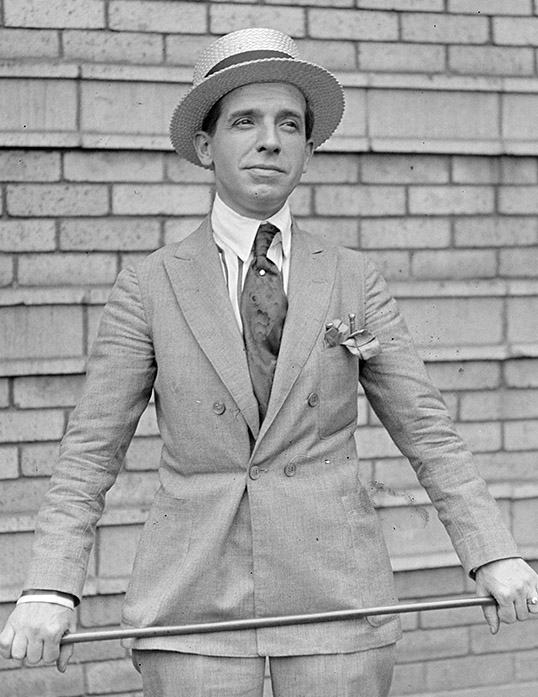
  Charles Ponzi became known in the early 1920s as a swindler for his money-making scheme. Although he didn’t invent the scheme of paying earlier investors using the investments of later investors, it still bears his name. These ‘Ponzi’ have been duplicated by swindlers like Bernie Madoff and Enron. Ponzi's original scheme ran for over a year before it collapsed, costing his "investors" $20 million at the time or about $250 million in today's dollars.

  But that might not be the most audacious way he made money.

  When a Boston financial writer suggested there was no way Ponzi could legally deliver such high returns in a short period of time, Ponzi sued for libel and won $500,000 in damages. While everything that the writer said was eventually proven true, the laws at the time put the burden of proof on the writer and it was still considered libel.

  Truth hurts, even sometimes the one delivering it.

“So have I become your enemy by telling you the truth?”

Galatians 4:16

  There are truths we don’t like to hear. There are truths some don’t want us to say. There are truths that people will cover up and ridicule you for telling. Some truths will get you in trouble for knowing them.  None of that changes that truth is truth no matter if we like it or don’t want it to be.

  Truth can get you in trouble. Truth can cost you popularity. Truth can make you an enemy of the state. Truth can make you an outcast.

 Yet, truth is worth it. It will outlast trouble; it will remain when the lies falter. Truth is a rock the though it may be beaten it will hold fast.

Truth may not be easy but it is worth it

Jesus answered, "... Everyone who is of the truth hears My voice."

John 18:37 


Comments

Popular posts from this blog

I Know All Those Words, But That Sentence Makes No Sense To Me

  Let’s say you travel back in time six hundred years or so.  Luckily, you happen across a fellow that speaks English.  Upon hearing your tale, he describes you as nice, smart, and handsome.  Wouldn’t you feel good?   You shouldn’t.  As Sol Steinmetz in his book, Semantics Antics , explains; Nice originally meant someone who was foolish, ignorant, senseless, or absurd (middle English 1300). Smart for the first 300 years of its use meant causing pain, sharp, cutting, or severe, a sense that survives in the idiom "smart as a whip.” Handsome wasn’t complimentary. When coined around 1425, it just meant easily handled; it didn’t have its current positive connotation until 1590.   You might think he said you were a kind, intelligent, good looking bloke, when in reality he said you were a foolish pain easily dealt with.   Words have an annoying habit of changing meaning over time in the same language and it becomes even more compli...

Master Your Self

  In a contest for the toughest president of the United States, it would be hard to go against Theodore Roosevelt.  He was known for his “manly” pursuits hunting big game, climbing the Matterhorn, participating in boxing match while president. (These weren’t play fights, he lost the vision on one eye because of them!)  Once before he was about to give a speech an assassin shot him in the chest.  Roosevelt refused to go to a hospital and insisted on giving his speech, still wearing his blood-soaked shirt!   Teddy might have become tough but he wasn’t born that way.  He was a sickly child that suffered from severe asthma that almost proved fatal.  As was a young boy, doctors discovered that he had a weak heart, and advised him to get a desk job and not strain himself.  He was homeschooled because of his many illnesses and spent most of his time indoors.   But then as a teen his father, whom Teddy Roosevelt revered, told his son, “ ...

Why Does A Lion Tamer Use a Chair?

  Ok, I know you have seen the image. A lion tamer enters in the cage of the beast and forces it to obey his commands using a whip, a gun and a chair. Now you can see how the whip and gun could come in handy but you might be wondering why a chair would intimidate an animal as powerful as a lion? Clyde Beatty taming a lion with a chair   It's not that the lion is afraid of the chair -- it's that the lion is confused by the chair. Cats are single-minded, and the points of the chair's four legs bobbing around confuse the lion enough that it loses its train of thought. Casually put, the chair distracts the lion from wanting to claw the lion tamer's face off. The powerful creature could destroy the chair in moment’s notice but instead it is distracted into submission.  It’s not too much different than how Satan controls us today. By the power of God we could overcome anything that he would use to subdue us. We can overcome the evil one (1 st John 2:13-14). ...