Let’s say you travel back in time six hundred years or so. Luckily, you happen across a fellow that speaks English. Upon hearing your tale, he describes you as nice, smart, and handsome. Wouldn’t you feel good? You shouldn’t. As Sol Steinmetz in his book, Semantics Antics , explains; Nice originally meant someone who was foolish, ignorant, senseless, or absurd (middle English 1300). Smart for the first 300 years of its use meant causing pain, sharp, cutting, or severe, a sense that survives in the idiom "smart as a whip.” Handsome wasn’t complimentary. When coined around 1425, it just meant easily handled; it didn’t have its current positive connotation until 1590. You might think he said you were a kind, intelligent, good looking bloke, when in reality he said you were a foolish pain easily dealt with. Words have an annoying habit of changing meaning over time in the same language and it becomes even more compli...
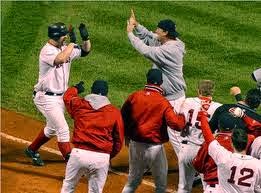 My best friend growing up was a baseball
player through and through. I’ll never
forget the story for his first “real” home run.
He had been playing high school ball for a year or two and was a good
hitter but had never hit one over the fence. Until that one day when he turned just right
on a fast ball and sent it out of the park. As he round the bases, you could see his smile
on his face from the stands. When he turned
past third, his teammates pilled out of the dugout to meet him with a chorus of
high fives and pats on the pack. The
jubilation continued until he stepped back in the dugout and was promptly called
out. You see in in all the congratulations
and excitement he never stepped on home plate. So when he left the playing field, he put
himself out; the only person on the field that could do so.
My best friend growing up was a baseball
player through and through. I’ll never
forget the story for his first “real” home run.
He had been playing high school ball for a year or two and was a good
hitter but had never hit one over the fence. Until that one day when he turned just right
on a fast ball and sent it out of the park. As he round the bases, you could see his smile
on his face from the stands. When he turned
past third, his teammates pilled out of the dugout to meet him with a chorus of
high fives and pats on the pack. The
jubilation continued until he stepped back in the dugout and was promptly called
out. You see in in all the congratulations
and excitement he never stepped on home plate. So when he left the playing field, he put
himself out; the only person on the field that could do so.
Comments
Post a Comment